Saturday, November 17, 2012

Chasing Joy


Psalm 100

A psalm. For giving grateful praise.

Shout for joy to the Lord, all the earth.

Worship the Lord with gladness;

    come before him with joyful songs.

Know that the Lord is God.

    It is he who made us, and we are his;

    we are his people, the sheep of his pasture.

Enter his gates with thanksgiving

    and his courts with praise;

    give thanks to him and praise his name.

For the Lord is good and his love endures forever;

    his faithfulness continues through all generations.


My son thinks our dog is hilarious. Dayton's first true giggle was at Bode jumping around the yard and barking. And this Indian summer when we would walk around and around the pond, just to escape the claustrophobia of our house, we would watch Bode chase butterflies. I'd never actually seen a dog chase butterflies before but leave it to our dog to do it. And then Dayton wasn't the only one giggling. It was hilarious. Our enthusiastic border collie would bound and leap after the butterflies leading him on an erratic chase around the pond. But eventually Bode would lose sight of the butterfly...or interest. Something else interesting would catch his attention or it just wasn't that much fun anymore to chase something so elusive as a butterfly.

I chase joy in the same way. Around and around in circles, bounding and leaping with no methodology to straighten my course, no plan to ensure success. And always, inevitably, I lose interest. Something more interesting and easier to catch steals my attention. Or I just give up all together. It's too hard, this joy thing. It's a nice idea but it's just not me. I wasn't made that way. Some people just can't be joyous...or joyful...whichever.

But that just isn't so. It can't be so. 

First, because the Bible says otherwise. And second, because if that's true then I'm doomed. I'm stuck in my Eeyore to Tigger to Eeyore cycle of my own nature. 

A drama queen since birth, I see the world through a dramatic lens. Gloom! Doom! Stress! Worry! Anxiety!!

EVERYBODY PANIC!!!

But I'm the only one squawking. My mother once said my brother is a duck, the rain waters just roll off his feathers, it doesn't rattle him. I, however, am a trumpeter swan...graceful and peaceful when the weather's just right, but when the rain starts to fall it's time to panic. A swan having a cow. A lovely sight.

And while Christmas is supposed to be all peace on Earth, good will to men, and joy to the world...I'm over here wringing my hands and biting my fingernails. I'm a Scrooge in Nephew Fred's clothing. I seem to embrace Christmas but underneath I'm really fretting and fussing and bah-humbugging about plans and people and people who get in the way of my plans. My plans, my plans, my precious plans. Like Scrooge and his gold, no one better interfere with my plans. Or else the squawking begins. This is not joy. This is not Christmas.

I could list you a thousand reasons excuses for this irritating behavior. I could get all Dr.Phil on you and explain from a psychological point of view why Christmas is now wrapped up with anxiety, why my tinsel is perpetually in a tangle. But there's no real point in it. Talking about what's wrong, doesn't do one blessed thing to move toward what is right. Or perhaps more importantly...righteous. 


Do not be anxious about anything, but in every situation, 
by prayer and petition, with thanksgiving, 
present your requests to God.
Philippians 4:6


So recently convicted of this ridiculous, self-centered behavior I've started chasing joy again.. But not in an erratic chase of circles where I'll eventually just get bored or tired or both and give up. This time I have a plan. And I have some tools.

1) I'm reading Ann Voskamp's book One Thousand Gifts. It's a book I've been avoiding for almost two years because I knew it would blast me from my comfort zone. And while I hate my comfort zone because it's stinks...I'm comfortable there. But I'm embracing the uncomfortable to move toward God and His joy.

2) I'm starting my own list of one thousand gifts. One thousand blessings from God, one thousand things I'm thankful for, one thousand things to celebrate. And the thing is...now that I've started counting, I see them everywhere. I would like to share this list on here because it may inspire somebody else, but I just can't commit to that. I don't have time to log into this blog as often as I'd like and I'm afraid that I will use that ask an excuse. Can't write in the blog, not worth writing down at all! (I know, because I did that before two years ago...)

3) Instead of asking God for things, even the right/rightoues things, I am choosing to only thank Him instead for the next two weeks. A friend of mine did this and she said it changed her life. I believe her. Because it's been a mere 24 hours and I already feel a change. I think this must be what detoxing feels like.

4) In a similar vein, when my instinct is to complain, grumble, nag, or otherwise squawk, I'm choosing to thank God for that very circumstance instead. This is hard but it is the very re-training and re-shaping that I need. It is taking every thought captive and making it submit. It is choosing to be thankful in all situations. Because the fact of the matter is, I am one of those people who will cry (ah-hem, flip my lid) over spilled milk. And that doesn't honor God, draw me nearer to God, or bringing me any closer to catching that butterfly.

5) Last, I have community and this means some accountability. I've always shied away from accountability because I like to hide. But I won't succeed and I'll never change unless I bare my soul and all my ugly and ask for some help. We are communal creatures, especially women, especially me. So here I am, ready to accept some love and help and prayers from my own community. And my community is pieced together through Facebook and emails and blogs and text and face-to-face friendships. This is community for a postmodern mom chasing joy.

And this time I'm not just chasing joy, but choosing joy. It goes hand in hand. When we choose joy, we catch it and then we give it away. I must choose to be thankful, to celebrate, to wear joy on my lips and harbor it in my heart. And then I will have caught it. It will be mine, no longer an elusive butterfly.

This blog started out being my journey towards a merry heart. And if you've followed me from the beginning, despite my long periods of silence, you know that I've wrestled with this. One minute I'm chasing the butterfly and the next I've seemingly given up and moved on with life. And I have no delusions of conquering this once and for all, I will always struggle. But this feels more like a real change. The real re-wiring of my heart that I have craved for so, so long. And what better time than Christmas?

I imagine that the shepherds, feeling a bit foolish, were chasing joy when they went from stable to stable in search of a babe in swaddling clothes. The wise men were chasing joy as they followed that mysterious star toward the child savior. Mary and Joseph must've been chasing joy as her belly grew swollen with the life of the King inside her. They couldn't have been the type to fuss and fret and squawk so they must've been chasing joy. Anna and Simeon caught their joy at the temple when Jesus came to be dedicated to God. Elizabeth and Zechaeriah caught their joy with the birth of their son, the prelude of the Messiah. These people didn't only chase joy but they chose it in their obedience. Joy is everywhere in the Christmas story, from the lips of Mary in her magnificat, to the returning of Zechariah's voice, to the alleulia of angels. Joy abounds at Christmas time.

And this Christmas, I am choosing joy.

And, lo, the angel of the Lord came upon them, 
and the glory of the Lord shone round about them: 
and they were sore afraid.

And the angel said unto them, 
Fear not: for, behold, I bring you 
good tidings of great joy, 
which shall be to all people.
For unto you is born this day 
in the city of David a Saviour, 
which is Christ the Lord.
And this shall be a sign unto you; 
Ye shall find the babe 
wrapped in swaddling clothes, 
lying in a manger.
And suddenly there was with the angel 
a multitude of the heavenly host praising God, and saying,
Glory to God in the highest, 
and on earth peace, good will toward men.
Luke 2:9-13

Sunday, November 4, 2012

A Hallmark Christmas Lesson

I vowed I wouldn't start Christmas early this year. I'm one of those people that usually starts listening to Christmas music in October. I justify it by saying I need to get in the spirit to start crafting all those handmade gifts I talk about making. But the fact of the matter is, I just love it. I'm one of those people. But since this is Dayton's first Christmas I wanted him to get the full dose of it in December. I didn't want the experience muddled with it being all drawn out. As if a six month old has a clue anyway...

But Hallmark started showing their Christmas movies this weekend and I got sucked in. There was nothing else on TV worth watching. I can only watch so many episodes of the Food Networks' 'Chopped' or reruns of 'Everybody Loves Raymond'. So I succumbed to the Hallmark channel's cheesy Christmas movies.

And this got me thinking...why does Christmas seem to creep in earlier and earlier each year?

Many people say it's because it's so commercial. The stores can make an extra sale by plastering the word 'Christmas' on everything. When they trot out the holiday merchandise early and start those holiday sales people buy, to get it out of the way, to avoid the long lines, to avoid the hustle and hassle later.

But I don't think it's all commercialism. Maybe I'm a Linus in a Charlie Brown world, but I don't think this early Christmas creep is just to make money. It's not all aluminum Christmas trees and holiday parties.

I think we crave the feeling of Christmas. We love the twinkling lights and snow covered roof-tops and lopsided but happy snowmen out in the yard. Who doesn't look forward to delicious holiday cookies and steaming mugs of hot cocoa with marshmallows bobbing like buoys? Every family has their own traditions and favorite movies. As a kid the Halsey family watched 'White Christmas' each and every year. I think my own family, the Berry family, will watch 'Muppets' Christmas Carol' every Christmas eve...and anxiously wait for all the cartoons to be on TV. There's a whole atmosphere of Christmas...rituals, traditions, that are familiar and homey and snug and warm.

Perhaps that's why I couldn't resist the Hallmark channel's Christmas movies. They have a particular gift for crafting Christmas. All of their movies take place in quaint towns full of quirky but lovable people. There's usually an old person who needs cheering up, or who cheers up a jaded young person. There's always a love story and a cute kid or two. The towns are all bedecked with wreaths and lights and snow always falls at just the right moment. And in the church there's always a Christmas pageant or a carol sing on Christmas eve. The Hallmark Christmas world is perfect. Just the right amount of greenery, mistletoe, cocoa, and carols. And we want that world...

Because that world isn't too busy for family and friends. That world seems so restful. The long lines and frazzled shoppers and exhausted salespeople don't exist in that world. Priorities are straight, or straightened, and there's something we crave in that.

I think this is the real reason Christmas sneaks in a little earlier each year. It's the whisper carried on the frosty winds...the whisper to come back to traditions of our youth...the whisper to cherish these fleeting moments...the whisper to savor...to worship the Savior.

Of course, the whisper gets covered up by the shouts of holiday deals and must-have toys and bargains and black Friday!!!!

An exclamation mark always overpowers an ellipses. The rush always overtakes a pause. But it's the pause we long for...and it's why we let Christmas come a little earlier every year. Because maybe this year, we'll get it right. We won't worry about that perfect gift or holiday dinner. It won't matter if we burn the cookies and all the gifts look like the dog wrapped them. Our holidays don't have to look like a Hallmark Christmas...it's the feeling we crave. The slowing down...the coming together...the worshiping on a holy night.

So, yes, I gave in when I said I wouldn't...I'm letting Christmas start early...this first weekend in November. I haven't started the music yet. We'll see how long I can delay that itch...but I won't apologize for letting Christmas come early in our house. I think maybe I need to let it in early because maybe I need that long to figure it out...not how to get have the perfect Christmas (thank you very much, Good Housekeeping)...but how to really have the right Christmas spirit in my heart and home.

Monday, July 30, 2012

Never Surprised


For he looks to the ends of the earth
and sees everything under the heavens.
Job 28:24

God is not surprised. Not now. Not ever. He wasn't surprised in Eden. He wasn't surprised at Golgotha. He's never been surprised for a moment in history. 

Disappointed. Saddened. Angered. Frustrated. But never surprised. 

I recently wrote a post about my favorite name for God. 'El-Roi: The God Who Sees Me'.

He sees all; He Knows all. 

Right now our world is bleak. There are people weary from the fight. There are hearts wondering what has happened and how it could have happened. This is what happens with churches fall apart. When the ugliness of the human race creeps into power in the body of believers. We're not immune to sin, even though we are saved from it.

Our world feels dark and the load feels heavy. My heart is aching for people that I love. I'm tempted to say that 'all' I can do is pray. As if prayer isn't action. As if prayer isn't powerful. As if prayer isn't good enough help. Oh, ye of little faith...me of little faith.

I worship the God who sees me. The God who is never surprised. The God who has it all under control, even if it feels like being in the middle of a mighty whirlwind.

God didn't make this happen but He did allow it. That is true for every pain, struggle, trial, and heartache you or I will ever experience. Sometimes it is for correction, to get us back into the safety of His flock. Sometimes it is to test us, to see if we will still choose to praise Him when our circumstances seem unbearable. Sometimes we have no idea what He's up to and we won't know until we reach the other side of Eternity. But He is still in control. Always in control. Never surprised.

It's not possible for His plan to be thrown so far of course that we end up outside of His plan. Our lives may be re-routed and end up on long and rambling detours, but that doesn't mean we've gone of His grid. He sitll sees us. We're still in the palm of His hand.

See, I have engraved you in the palms of my hands. 
Isaiah 49:16

When Dayton was diagnosed with jaundice and we had to stay overnight in the hospital I still felt like I had no idea what to say to this stranger who belonged to me. My mom was a natural, she talked and sang and  knew just what to do. I couldn't seem to think of anything to say or any songs to sing. Me, who always has a song in my heart. But I was left alone with him once and I remember looking into his little bassinet and I just started to sing, 'He's Got the Whole World in His Hands'. He loved it. I don't know how I knew it because he couldn't smile yet, but I could just tell that he loved my singing this song to him. I sang it to him again the other day. It's become our anthem, our reminder, that God is in control. And that day in the hospital I just kept adding verses, anyone I could think of, even our dog. Well, I'm still adding those verses. It's now our prayer. Every time I sing this simple melody, borrowed for my childhood of simpler times, I am actually praying. I'm calling on God's power, on His control, on His watchful eye. I name the people I love and that are in need of His comfort. If you're one of them, please believe, you are in His hands.

The Lord bless you 
    and keep you; 
 the Lord make his face shine on you 
    and be gracious to you; 
 the Lord turn his face toward you
    and give you peace. 
Numbers 6:24-26


Friday, July 20, 2012

A Cheering Example to Her Sex


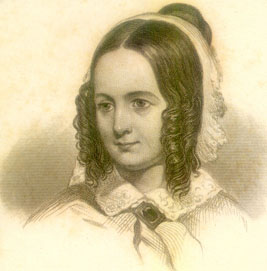
This is the biography portion of my thesis regarding Sarah Josepha Hale and 'true womanhood'. I may end up sharing more bits and pieces of that paper as I find her words and thoughts on domesticity to be inspiring for me, as I am coming into my own as a mother as well as a wife. 
I hope you enjoy reading about this incredible woman and maybe you'll get a sense of what I love her so. 
When Sarah Hale sat down to write her cookbook full of practical and stern advice to American housewives, she made sure to tell her readers, “I …write what I know to be true…I have been a housekeeper, both in the country and the city, and have had a practical knowledge of those rules of domestic economy which I shall recommend. And I have brought up a family of children, without the loss, or hardly the sickness, of one of them during infancy and childhood. I can, therefore, claim some experience” (Good 11-12). She knew that it was important to establish her credibility when giving ‘rules of domestic economy’ and even more so, when instructing women on True Womanhood. Sarah Josepha Hale was, in fact, one of the leading authorities concerning True Womanhood and “no one has had greater influence, or become more universally popular among her countrywomen” (Woman’s 686).
If truth be told, the works of Sarah Josepha Hale seem to have been passed over by many scholars interested in True Womanhood. The majority of writing concerning Hale focus on her work with Godey’s Lady’s Magazine and little else. This is a phenomenon that would surprise most nineteenth-century women because she was instrumental in the formation and continuance of True Womanhood. In her time, she was well-known for being a champion of women’s education and philanthropic causes, as well as, an authoress of novels, advice annuals, and cookbooks. True, Hale was not the only woman writing about women and for women. For example, women like Catharine Beecher and Margaret Fuller have interesting writings concerning True Womanhood, both for and against it. What makes Hale unique is that she was the complete package—a daughter, sister, wife, mother, and career woman—unlike Beecher, for example, who never married or had children. Given her wide influence and her personal experience, Hale is a qualified candidate for study and research that has been disregarded for far too long.
 In 1788 Sarah Joespha Buell was born in small town in New Hampshire. Her father, Gordon Buell, had been a farmer but abandoned farming after years with little success to be an innkeeper, which would prove to be just as unsuccessful. For Sarah, this meant that “poverty and home-schooling [would be] the two major elements of her childhood” (Montgomery 63). Concerning her education, Sarah would go on to write much later in life:
I was mainly educated by my mother, and strictly taught to make the Bible the guide of my life…The books to which I had access were few, very few, in comparison with the number given children now-a-days; but they were such as required to be studied—and I did study them. Next to the Bible and The Pilgrim’s Progress, my earliest reading was Milton, Addison, Pope, Johnson, Cowper, Burns, and a portion of Shakespeare (686).
 This education may have been homespun but it opened Sarah to the world of language, imagination, and religion. She was eternally grateful to her brother, Horatio, who was attending Dartmouth, for “supervis[ing] his sister’s progress in a course of study paralleling his own, and which included ‘Latin, and the higher branches of mathematics, and of mental philosophy’” (Tonkovich 20, Woman’s 687). Her brother’s help and influence allowed Sarah to continue her education above and beyond normal standards for a nineteenth-century girl. She flourished under Horatio’s tutorship and the education she gained was near equal to her brother’s college degree.
These quaint anecdotes of Sarah’s early life show that “although Gordon and Martha Buell were not among…[the] social or intellectual elite, their home life was rich in intellectual stimulation. The details of Sarah’s childhood reading and the fact that her brother Horatio met Dartmouth’s admission requirements, suggest, that her family was well read” (Tonkevich 29). Poverty was not a prohibition to Sarah’s success, even in her early years, she learned to surpass difficulties and strive for improvement, especially the improvement of her mind.
While still living at home and helping to make ends meet, Sarah became a schoolteacher at a local school. She expanded her curriculum to include unconventional subjects including Latin, higher mathematics, and philosophy. She took her students on nature hikes and picnics so that they might study botany and other natural sciences. Sarah also insisted on teaching boys and girls together in order that girls might be able to have the same education as boys; this was an ideal she believed in and never relinquished. She had great success as a teacher, and for the rest of her life, Sarah would campaign for better educational opportunities for women.
While still a young woman, Sarah suffered the pain of tremendous loss. Her brother Charles tragically died at sea, her sister and mother both died from tuberculosis on the same day in 1811, and her father died shortly after. Yet, if every thunder cloud does have a silver lining, David Hale was Sarah’s glimmer of hope. Biographer Barbara Venton Montgomery explains, “she did not consider matrimony while providing for the members of the family, always her first concern. Without them, she turned to David Hale who wanted to care for her. They married in 1813” (64). David had stayed often inn the family inn, clearly captivated by the beautiful Sarah, and now her married her.
Their marriage was remarkable; “they had five children within nine years. They studied French, botany and geology together in the evening and with friends began a small literary society. They hiked the New England countryside together and discussed events of the day and her poetry which David encouraged her to write” (Montgomery 64). The literary society “included women as well as men, family members (David Hale and his sister Hannah) as well as other men of substance in the community…Its membership bespeaks class privilege, or so one must conclude from the rather florid account of the group, which notes the members’ ‘well-sustained complacence at their advanced social position’ (Tonkevich 30-31, Parmelee 267). The society provided Sarah with her first outlet for writing and expressing herself, and her inclusion in the society indicates that David respected Sarah not only for being his wife, but also his friend and his equal. In fact, Sarah’s inclusion in the literary society would prove to be a means to an end when Sarah was dealt yet another massive blow.
            David, the love of her life, passed away “on September 25, 1822, after a short illness [of] pneumonia”, just two weeks before the birth of their youngest son, William (Finley 37). The stun of losing a man that had cherished her as a wife, a peer, a friend, and a lover was devastating. Sarah “wore black mourning for David the remainder of her life and never considered the possibility of remarriage”(Montgomery 67). By nineteenth-century standards she should have remarried or moved in with her nearest male relative, but instead, Sarah pushed her pain aside and made a life for herself. The Hales had not been rich, although they might have lived comfortably on David’s earnings as a lawyer had he lived. However, Sarah soon realized that she would be raising her children in poverty as the few fees from David’s practice could not provide for them as they needed. Thus, “it was in the hope of gaining the means for their support and education that she engaged in the literary profession”(Woman’s 686).
            The members of the literary society used their individual influences and collective resources to get a book of Sarah’s poetry published. The book sold well and encouraged her to write her first and only novel Northwood; or Life North and South. Her novel was an “instant success” in both America and in England, and went to press multiple times. In 1830, soon after the publication of Northwood, she was soon asked to move from New Hampshire to Boston, with her family, and begin a ladies’ magazine. By accepting this invitation Sarah became the first American lady editor, a “pioneer in this species of literature” (Woman’s 686). Then, in 1837 Louis Godey, the “Prince of Publishers” bought out The Ladies’ Magazine and merged it with his own magazine, creating Godey’s Lady’s Book and making Sarah editor (Finley 43). The difficulty was that Godey’s magazine was published in Philadelphia, which would have required another move for Sarah and her children.
The decision to move from Boston was impacted by the unimaginable loss of her eldest son David—named for his father—when he passed away suddenly. Her son’s tragic death understandably caused Sarah to feel a surge of motherly protection and concern for all of her children, and so she requested that she be permitted to edit Godey’s in Boston until William, her youngest, graduated from Harvard. Louis Godey was sympathetic to her needs as a mother and allowed for her to edit the magazine long-distance. Given the difficulty of travel and the unreliability of the postal system, editing a magazine in Boston and publishing in Philadelphia was a very stressful and complicated procedure. Despite the difficulty, Sarah had amazing success; her “writing was emphatically personal and approximated conversation caught in print. This combination made her writing accessible to the readers, men and women alike, who enthusiastically responded to the magazines she edited” (Tonkevich 30).
            Sarah worked on Godey’s Lady’s Book for forty years. Under her direction Godey’s became one of the most widely read magazines of the nineteenth-century. She included recipes (which were then called ‘receipts’), fashion plates, sheet music, clothing patterns, poetry, short stories, and scholarly essays. She supervised its production through the Mexican War, the Civil War, Emancipation, and Reconstruction. She retired in 1877 and died that same year at the age of eighty-nine. Her success was considered “richly deserved, and her energy, devotion, and perseverance under circumstances the most trying, afford a cheering example to her sex” (Woman’s 686).
            Sarah Josepha Hale was a woman with an interesting and exemplary life. She lived what she wrote. She had been a devoted daughter, a beloved sister, a cherished wife, and a self-sacrificing mother. Her picture of domestic bliss seemed attainable to her, because she had lived it with David. Sarah did not make impossible demands or set-up unlikely standards for her readers; she wrote what she knew, what she believed, what she felt was right. Sarah began life as a poor young girl in New Hampshire, and by her own determination and talent, she became one of the most influential and successful women of the nineteenth century, as well as an accomplished housekeeper, and proud mother and grandmother.


Monday, July 16, 2012

The Original Martha Stewart


To graduate with my Bachelor of Arts in Literature I had to write a senior thesis. I considered the many works of great literature that I had read over my four years at school. But I knew that I wanted to write something different, to touch on something or someone that had been overlooked. So I skipped over Byron, Shakespeare, and Bronte...even though I love them...and settled upon a writer that had been completely ignored by the canon. Sarah Josepha Hale. I used her writings to argue that the woman's sphere was an evil institution of the past. I believe that domesticity and womanhood should be celebrated, not shunned. I feel that modernity only gives us one side of the story...the extreme feminist side. And it's not an accurate picture. 


I fell in love with Hale as I poured over her works...mostly cookbooks and copies of 'Godey's Ladies Magazine'. I read biographeies of her and the few precious words she had written about herself. She had always worked hard to be educated and well read. She was widowed young with four sweet children to raise. First a milliner, then a writer, and finally a lady editor, she labored tirelessly to provide for her children. She instructed women across the country on how to do everything from prepare a chicken to treat sicknesses to wash windows. It was Hale who rallied the ladies to write letters to Abraham Lincoln insisting that Thankgiving be made a national holiday. And it was Mrs. Hale who penned a song that every child knows, 'Mary Had a Little Lamb'. The magazine she edited for several decades was the predecessor for today's magazines like 'Lady's Home Journal' and 'Better Homes and Gardens'. She published short stories, works of music, instructions for crafts. She even befriended a young Edgar Alan Poe and helped him get published. It's for these reasons that those that do know of her consider her the original Martha Stewart. Although, Martha doesn't hold a candle to Sarah.

I fear that if I were to start in on everything she stands for that I would basically be re-writing my thesis which is over 20 pages. Instead, I've pulled a handful of my favorite quotes. Someday, when I have more time, I may write more about my dear friend Sarah Josepha Hale but for now, I'll let her words speak for her.

"I place woman’s office above man’s because moral influence is superior to mechanical invention…woman’s mission is to mould mind, and form character; while man’s work deals with material things.  I do not agree with those who would place women in competition with men in their industrial pursuits. Such a course would not only deteriorate the feminine nature, but fatally injure society, because giving material things a still greater preponderance over moral goodness than is now to be found in Christendom”


“…There were care and preparation in the forming of woman which were not bestowed on man. Why was this recorded, if not to teach us that the wife was of finer mould, and destined to the more spiritual uses,--the heart of humanity, as her husband was the head?...Does it not mark the better nature of woman, that, after the fall even, when she was placed under the control of her husband, she yet held their immortal destiny in her keeping?...not a ray of hope can be found in the destiny of the man, save through the hope given to the woman. Thus they stood together, when, after their sorrowful ‘fall’, they were drive forth from Eden, and sent—Adam to till the ground, ‘cursed for his sake’, or sin; Eve to become the ‘mother of all living’” 

“In the history of creation, it seems that Adam was not perfect till Eve was made to be with him.  All the words of the Creator were pronounced ‘good’ til we come to the man: then the word of God was—‘it is not good that the man should be alone: I will make a help-meet for him.’…The happiness and glory of Eden were then perfected”

“Is it a disparagement to the rose that it differs from the acorn? Would the peach choose to be identical with the potato? Nature gives the kindly ‘fruits of the earth’ their uses and virtues, all different and all good. With mankind it is similar. Men and women differ as essentially in their minds of modes of thoughts as in their forms”


 “And even now, happy homes may be made, it the husband and wife would lovingly work for this sweet enjoyment.  Why should all the responsibilities be laid on woman? Would it not be well to give men a lesson or two on their home-duties? Why should not the husband be advised to bring home ‘smiles and sunshine’ for the wife, which she is admonished always to ‘have only smiles and sunshine for the husband when he comes home wearied with his day’s labor’?”
“A young bride, first making her own home, should think of this, and remember that much of her future enjoyment may depend upon the halo her hand shall throw around the domestic sanctuary” 

Sunday, July 15, 2012

El-Roi...The God Who Sees Me

Thereafter, Hagar used another name to refer to the Lord, who had spoken to her. She said, “You are the God who sees me.” She also said, “Have I truly seen the One who sees me?”
~ Genesis 16:13 

When I was in college I was part of a women's Beth Moore Bible study. If any of you have every done a Beth Moore Bible study you know that it's pretty intense and you learn a lot--about the Bible, about God, and about yourself. Not necessarily in that order. This study was 'The Patriarchs'. At first, I thought, "The patriarchs? How can a women's Bible study be all about men?" Foolish little me just didn't see it. But I have always been grateful for that study. I learned so much...about the Bible, about God, and about myself. Not necessarily in that order.

So if this study was six or so years ago, why bring it up now? Well...lately, I've been reminded of one of my favorite parts of that study. It's become one of my favorite stories in the Bible, and it features a little respected or valued person. Hagar. Hagar gets a bad rap most of the time, I think. It wasn't her fault. She was just a pawn in Sarai's quest for fulfillment. She was used, abused, and cast aside. And posterity has had little compassion for her.

Genesis relates two stories of Hagar going out into the desert, running away from and/or thrown out by Sarai. And both times, God comes to her. The writers of Genesis paint these tender scenes of God in the form of angels coming to Hagar to comfort and guide her. The first time Hagar is instructed to return to Abram & Sarai; the second time God provides life giving water for Hagar and Ishmael and reassurance that He will sustain them. It's so clear that God has time and tenderness for this scared servant girl.

In Genesis 16, the first time Hagar runs away, she gives God a name. This is one thing I learned in 'The Patriarchs'; people in Genesis are always giving God names. In this way, Genesis is one of the best books to read to get a sense of who God really is. So many facets of His character are revealed. Hagar gives God the name 'El-Roi' (and in a humorous side note, I can't help but think of the stinkin' Jetsons...'his boy Elroy!' *ah-hem*...anyway...).

El-Roi is translated as 'The God who sees me'. 

Take that in for a moment. Soak in it. Because it really is beautiful. 

And I can tell you it's true. He does see me, and He sees you, too. I've been experiencing this incredible reality for the last 10 weeks. Ever since I started recovering in the hospital after giving birth. It's been in the little things that became really big things for me. The examples are deeply personal so I'm afraid I must keep them to myself. But I can tell you this...I cried out to God from within my heart, and I really believed He could and would do what I asked from Him...and He hasn't let me down. He is the God who sees me. He sees my pain, my fear, my exhaustion, my hopes, and he hears my prayers.

That's the other part of Hagar's story. When she and Ishmael are cast out by Sarah (her name has been changed in the time between Part 1 and Part 2 of Hagar's story) the Bible tells us that God heard Ishmael crying. And so God came to Hagar to comfort and provide for her. He proves that he's not only the God who sees but the God who hears.

So can I tell you, the next time you are afraid and feel all alone...or the next time you feel completely powerless to do what needs to be done...the next time you are over-whelmed by your reality...remember that there is a God who sees you. And just call on El-Roi. He will be faithful. He's always faithful.


The faithful love of the Lord never ends!

    His mercies never cease.
23 
Great is his faithfulness;
    his mercies begin afresh each morning.
24 
I say to myself, “The Lord is my inheritance;
    therefore, I will hope in him!”


~ Lamentations 3:22-24

Friday, June 8, 2012

Be Still and Know

I intended to write my son a letter every month on his birthday. I started one...but I was too exhausted to finish it. I think this is the theme of motherhood. Exhaustion mixed with good intentions. And the sheer resolve to get something done once in awhile.

This month went by quickly, in some ways. The days go fast. The nights...not so much. But I try to stay positive, even at 3am when he's been up for two hours alternating between eating, filling diapers, and crying. My short temper and desire for control get us nowhere fast so I'm learning to just let it go. Let it be.

When I wrote the post about Dayton's birth I left out one huge important detail. When I realized it several hours, maybe even a day later, I was surprised. But we'll blame it on the exhaustion.

Curtis and I weren't able to take the childbirth classes because of our work schedules, so I didn't have any Lamaze training. We got a DVD out from the library but it was a video-taped seminar from approximately 1981 so we mostly laughed at it and got nothing out of it. My mom was a big fan of Lamaze so she talked to me some about breathing and having a focal point. Years ago she had told me that she used Philippians 4:13 (I can do all things through Christ who strengthens me) to get through her labor with me. So I thought a little bit about these things in the days before being induced, but I didn't have a plan. Surprising, isn't it?

Well..I suppose that isn't exactly accurate. My plan was to have my mom there with me. Curtis' job was to hold my hand and let me yell at him, if necessary. My mom's job was to tell me how and when to breathe. Neither of these happened. Like I said in the other post, I was surrounded by nurses so Curtis' couldn't get near me. And they had me hold my own legs instead of using stirrups so I wasn't able to hold anyone's hand anyway. And by the time my mom got to the hospital I had gotten my epidural and felt nothing. Because labor started earlier than expected and the worst of my contractions happened in the middle of the night, my mom wasn't there to tell me how to breathe. I just tried to inhale and exhale deeply. I did hold Curtis' hand for that part, so I suppose...his job was partially fulfilled.

I remember thinking that I didn't want to use Philippians 4:13 for my focal point. It didn't feel right, it wasn't the source of comfort that I wanted. I don't know why, it just felt that way. But somewhere in the midst of my contractions, through the fog of my sleeping pill haze, a song came back to me. A song I had learned in show choir my junior year. Be Still and Know That I Am God. I have to be honest, I can't even remember all of the lyrics, and I had completely forgotten the first part of the song until days after delivery, but the bit I had in my mind, I repeated over and over and over again.

Be still and know
That I am God
Though the mountains may fall
To the heart of the sea
Tho' the Earth
May Give Way
Tho' the....(mind goes blank)
The mountains may quake,
Be Still, Be Still,
Be Still and Know

Come see the works of the Lord,
Come see the works of the Lord!

I turned these words over and over in my mind. Through the contractions, through the haze, through the worry. Be still and know that I am God.

My junior year of high school was 2001. We learned this song after the attacks on September 11th. We must've sung it a hundred times that year. My choir teacher retired that spring and we sang it at her last Pops concert. This song has always been riddled with emotion for me, and now there's one more layer. A layer of beauty and celebration...a layer about life and beginnings, instead of endings.

And last week when we took Dayton to church for the first time....the verse which was read before the worship set...

“Be still, and know that I am God; 

    I will be exalted among the nations,
    I will be exalted in the earth.”
Psalm 46:10
Related Posts Plugin for WordPress, Blogger...